
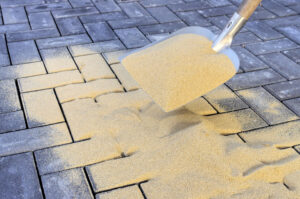
Pavers need re-sanding because the sand in the joints between them washes out, breaks down, or gets displaced over time. That joint sand locks pavers together, keeps them from shifting, and blocks weeds and pests. Once it is gone, a beautiful patio or driveway can start to wobble, sink, and fill with weeds. At Fuller Stone Care, paver sanding is one of the simplest services we provide, and it makes a dramatic difference in how outdoor hardscapes look and perform.
What Does Joint Sand Actually Do?
The sand between pavers is not just filler. It plays several important roles:
- Interlocking the pavers so weight from foot traffic and vehicles spreads across the whole surface instead of pressing on individual stones
- Preventing shifting and movement that leads to uneven, wobbly, or sunken pavers
- Blocking weed growth by filling the gaps where seeds would otherwise take root
- Discouraging ants and other insects from nesting in the joints
- Reducing water intrusion into the base layer underneath
Without enough joint sand, pavers lose the friction that holds them in place, and the entire system becomes less stable.
What Causes Joint Sand to Disappear?
Even a well-installed paver surface loses sand over time. Common causes include:
- Rain and irrigation runoff washing sand out of the joints
- Pressure washing, especially at high pressure or close range
- Wind and regular sweeping
- Ant colonies excavating sand from below
- Weeds and roots pushing sand out as they grow
Pressure washing is a big one. Homeowners often clean their pavers and unknowingly blast out most of the joint sand in the process.
What Are the Signs Your Pavers Need Re-Sanding?
You may need paver sanding if you notice:
- Joints that look empty or noticeably lower than the paver surface
- Weeds, moss, or grass sprouting between pavers
- Ant hills or small piles of sand along the edges
- Pavers that rock, shift, or click when you step on them
- Uneven or sunken areas forming in high-traffic spots
Catching these signs early is far less expensive than resetting pavers that have shifted significantly.
Regular Sand vs. Polymeric Sand: Which Is Better?
There are two main options for refilling paver joints:
- Regular joint sand is affordable and easy to apply, but it washes out more easily and does little to stop weeds.
- Polymeric sand contains binding agents that harden after being activated with water. It stays in place better, resists erosion, and helps keep weeds and insects out.
Polymeric sand must be applied correctly. If too much is left on the surface or it is activated improperly, it can leave a hazy film on the pavers. Professional application helps avoid these problems.
How Does Sanding Work With Sealing?
Re-sanding and sealing work best as a team. After the joints are refilled, professional paver sealing helps stabilize the sand, enhances paver color, and protects the surface from stains and UV fading. A breathable sealer also allows moisture underneath to escape, which helps prevent cloudiness and efflorescence.
For pavers that are faded, stained, or uneven, a full paver restoration may combine cleaning, re-sanding, and sealing into a single project.
Keep Your Pavers Strong, Stable, and Beautiful
Joint sand is a small detail that protects your entire paver investment. If you are seeing weeds, gaps, or loose pavers, Fuller Stone Care can clean, re-sand, and seal your patio, driveway, or walkway to bring back a tight, polished look. Call 310-944-9099 today to schedule your free quote.