
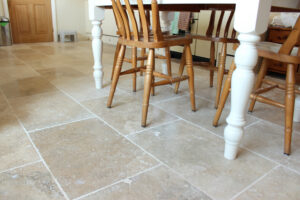
Travertine is one of the most visually striking natural stones on the market. Its warm tones, distinctive texture, and timeless appearance make it a popular choice for floors, patios, showers, countertops, and entryways. But while travertine looks like it can take anything you throw at it, the reality is quite different. This stone is more vulnerable than it appears — and without the right care routine, its beauty can fade faster than most homeowners expect.
If you have travertine in your home, understanding what makes it unique is the first step toward protecting it for the long term.
What Makes Travertine Different
Travertine is a form of limestone, which means it shares one of limestone’s biggest weaknesses: it is a porous, calcium-based stone that reacts poorly to acidic substances. Wine, citrus juice, vinegar, and even many household cleaners can etch the surface, leaving dull spots or visible damage that can’t simply be wiped away.
Beyond its sensitivity to acids, travertine is also defined by the tiny holes and voids that form naturally during its creation. These pits are part of what gives travertine its distinctive character, but they are also entry points for dirt, moisture, and bacteria. Over time, unsealed travertine soaks in everything it comes into contact with — and getting that buildup out takes more than a mop and a bucket.
Why DIY Care Often Falls Short
Many homeowners assume that keeping travertine clean is just a matter of regular mopping or wiping down surfaces. In reality, using the wrong products — even ones marketed as “stone-safe” — can strip sealers, accelerate etching, or push contaminants deeper into the stone’s pores.
The cleaning products and techniques that work well on ceramic tile or porcelain are often entirely wrong for travertine. Without knowing what your stone has been sealed with, what finish it has, and how much wear it has experienced, it is difficult to know what treatment is appropriate. That guesswork can turn a minor maintenance issue into a restoration job.
The Role of Sealing and Polishing
Sealing is one of the most critical steps in travertine care, and it is one that needs to be repeated on a regular schedule. A proper sealer creates a barrier that slows the absorption of liquids and contaminants, giving you more time to clean up spills before they penetrate the surface. But sealers wear down over time — especially in high-traffic areas or spaces that are frequently wet.
Polishing is another service that travertine benefits from regularly. Foot traffic, furniture movement, and general daily use gradually dull the surface of even the most well-maintained stone. Professional polishing restores the sheen and smoothness that makes travertine so appealing in the first place.
When both sealing and polishing are kept on schedule, travertine holds up remarkably well. When they are neglected, the stone begins to look tired, stained, and worn — and no amount of scrubbing will bring it back without professional intervention.
When It’s Time to Call a Professional
If your travertine is showing signs of etching, discoloration, cracking, or significant pitting, it is time to bring in someone who knows this stone inside and out. Fuller Stone Care offers travertine cleaning, polishing, repair, restoration, sealing, and sanitizing for both residential and commercial clients. Whether your stone needs a routine refresh or more intensive restoration work, our team has the knowledge, products, and experience to get it looking its best again.
Give Fuller Stone Care a call at 310-944-9099 today for a free quote. Your travertine deserves the kind of care that keeps it beautiful for decades to come.