
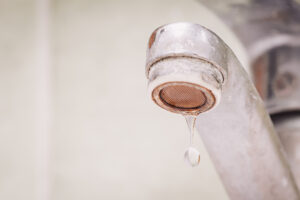
If you have natural stone surfaces in your home or business, you already know they require a certain level of care to stay looking their best. But one threat that often goes overlooked is hiding in plain sight — your water. Hard water, which is common throughout Southern California, contains elevated levels of dissolved minerals like calcium and magnesium. Over time, these minerals accumulate on stone surfaces and cause damage that goes far beyond cosmetic. Understanding how this happens is the first step toward protecting your investment.
What Hard Water Actually Does to Stone
Every time water contacts a stone surface and then evaporates, it leaves behind trace amounts of mineral deposits. A single instance is barely noticeable. But over weeks, months, and years of repeated exposure, those deposits build into a stubborn layer of scale. This is the chalky white or grayish residue you may have noticed around faucets, on shower walls, or along the edges of countertops.
For porous stones like marble, travertine, and limestone, the problem goes deeper than the surface. Mineral-laden water can seep into the pores of the stone and deposit calcium carbonate beneath the surface, weakening the structure over time. The result is a stone that looks dull, feels rough, and is increasingly vulnerable to cracking and etching.
Granite and slate are denser and more resistant, but they are not immune. Without proper sealing and maintenance, even harder stones will eventually show signs of hard water damage.
The Etching Problem
Hard water and etching often go hand in hand. When water with a high mineral content sits on calcium-based stones like marble or limestone, a chemical reaction occurs that eats into the surface of the stone. The result is dull, slightly recessed spots that cannot be removed with standard cleaning products. Many homeowners mistake etching for a stain and spend time and money on cleaners that do nothing to address the actual problem.
This is one reason why routine professional care is so valuable. Fuller Stone Care can identify the difference between a stain, a mineral deposit, and an etch mark — and apply the right solution for each. Using the wrong product on etched stone can make the damage significantly worse.
Where Hard Water Damage Is Most Common
Showers and bathroom surfaces are the most frequent victims of hard water damage, simply because they are exposed to water on a daily basis. Stone tiles, walls, and floors in wet areas should be on a regular maintenance schedule to prevent mineral buildup from becoming a long-term problem.
Kitchen countertops are another common trouble spot, particularly near the sink. Splashing and standing water create the perfect conditions for mineral deposits to accumulate, and the constant use of the counter means there is little time for the surface to dry fully between uses.
Outdoor stone surfaces are also vulnerable. Sprinkler systems, rain, and natural groundwater all contribute to mineral exposure, and outdoor stone is subject to temperature fluctuations that cause it to expand and contract — making it easier for water to penetrate.
Professional Treatment Makes the Difference
Once mineral buildup has taken hold, removing it safely requires the right products and technique. Harsh acids can strip or etch the stone further, while ineffective cleaners simply push the deposits around without dissolving them. Fuller Stone Care has the expertise and professional-grade solutions to remove hard water deposits without harming the integrity of your stone.
Following treatment, proper sealing creates a barrier that slows future mineral penetration and makes routine maintenance easier. Combined with a regular care schedule, sealing is one of the most effective tools for keeping hard water damage from recurring.
If your stone surfaces are showing signs of mineral buildup or dull patches that will not clean up, contact Fuller Stone Care at 310-944-9099 for a free quote. Our team will assess the damage and recommend the most effective course of treatment.