
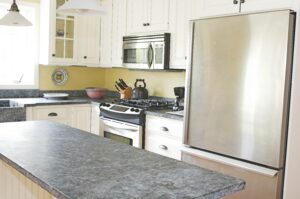
Slate has a way of making a room feel grounded and timeless. Its layered texture and deep, earthy colors show up on everything from kitchen floors to fireplace surrounds to outdoor patios. Yet that same natural character is what makes slate one of the more demanding stones to live with. Unlike a polished granite slab, slate is soft, layered, and prone to surprises if it is not cared for correctly. Here is what every slate owner should understand about keeping these surfaces looking their best.
Why Slate Behaves Differently Than Other Stone
Slate is a metamorphic stone made up of thin, compressed layers. Those layers are part of its charm, but they also mean slate can flake or peel over time, a process known as spalling. The surface is naturally textured rather than glassy, so dirt and grime settle into its clefts and ridges more easily than they would on a flat countertop. Slate is also sensitive to acidic and abrasive cleaners, which can strip its color and leave dull patches that are difficult to reverse.
Cleaning Slate Without Causing Harm
The biggest mistake homeowners make with slate is reaching for whatever cleaner is under the sink. Acidic products, including many all-purpose sprays and anything containing vinegar or citrus, can etch the surface and fade its tones. Abrasive pads and powders are equally risky on such a soft stone. For routine care, a soft cloth or mop with warm water and a pH-neutral stone cleaner is the safest choice. When slate develops stains or stubborn buildup that ordinary cleaning will not lift, that is the point to call in a professional rather than escalating to harsher chemicals.
Sealing Keeps Slate Protected
Because slate is porous, sealing is one of the most important steps in protecting it. A quality sealer slows the absorption of water, oils, and stains, and it helps guard against the flaking that exposed slate is prone to. Interior slate generally needs resealing every couple of years, while outdoor slate that faces sun, rain, and freeze-thaw cycles may need attention more often. The right sealer depends on whether you want a natural matte look or an enhanced finish that deepens the stone’s color, which is one reason professional guidance pays off.
Indoor and Outdoor Slate Have Different Needs
Slate flooring inside the home faces foot traffic, spills, and household cleaners, so consistent sealing and gentle maintenance keep it looking sharp. Outdoor slate patios and walkways deal with a tougher set of challenges, including standing water, mold and algae growth, and temperature swings that can accelerate spalling. Each environment calls for a tailored approach, and treating them the same way often leads to premature wear.
When to Bring in a Professional
Slate rewards regular care, but some situations are beyond routine maintenance. Flaking layers, lost color, deep stains, and a tired, faded finish are all signs that the stone needs expert attention. Professional cleaning, resealing, and restoration can bring neglected slate back to life and prevent small problems from becoming costly ones. At Fuller Stone Care, we have spent years learning what each type of stone needs, and slate is no exception.
If your slate floors, walls, or patios are looking worn or you simply want to keep them protected for the long haul, Fuller Stone Care is here to help. Call us today at 310-944-9099 for a free quote and let us put our experience to work on your stone.