
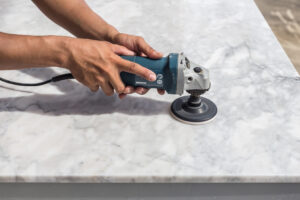
When natural stone starts to look dull, many property owners assume polishing is the solution. While polishing can enhance shine and refresh the surface, it doesn’t address deeper issues. In many cases, stone requires restoration—not just polishing—to truly recover its beauty and performance. Understanding the difference can prevent wasted time, money, and frustration.
What Polishing Actually Does
Polishing is a surface-level process. It refines the top layer of stone to improve smoothness and reflectivity. Polishing works best when the stone is structurally sound and free from significant damage.
This process is ideal for:
- Minor dullness
- Light surface wear
- Loss of shine from regular foot traffic
Polishing improves appearance but does not correct underlying problems.
The Limits of Polishing Alone
Polishing cannot fix deep scratches, cracks, etching, or uneven surfaces. Attempting to polish damaged stone often results in uneven shine or highlights imperfections instead of hiding them.
When damage is present, polishing alone may offer temporary improvement—but the issues quickly return.
What Stone Restoration Involves
Restoration goes beyond surface enhancement. It addresses the structural integrity and condition of the stone. Restoration may include:
- Honing to remove scratches and etching
- Lippage removal to level uneven tiles
- Crack and chip repair
- Deep cleaning and stain removal
- Re-polishing and sealing
The goal is to return the stone as close as possible to its original condition.
Signs Your Stone Needs Restoration
Polishing is not enough if you notice:
- Deep scratches or etch marks
- Uneven tile edges
- Persistent stains that won’t lift
- Cracks, chips, or surface damage
- Dull areas mixed with overly shiny spots
These symptoms indicate deeper wear that requires corrective work.
Why Restoration Extends Stone Lifespan
Ignoring damage allows it to worsen. Moisture enters cracks, foot traffic increases wear, and cleaning becomes more aggressive—accelerating deterioration.
Restoration corrects problems early, preventing the need for replacement and preserving the stone for years to come.
Matching the Solution to the Stone Type
Different stones respond differently to polishing and restoration. Marble and limestone, for example, are softer and more prone to etching, while granite is harder but still susceptible to wear.
Professional evaluation ensures the correct techniques are used for each material, avoiding further damage.
Why DIY Approaches Often Fall Short
Store-bought polishing products and rental equipment cannot replicate professional restoration techniques. Improper use can create swirl marks, uneven finishes, or additional damage.
Professional restoration relies on specialized tools, abrasives, and experience to achieve consistent results without compromising the stone.
How Fuller Stone Care Determines the Right Approach
At Fuller Stone Care, every project begins with an assessment. If polishing will deliver lasting results, that option is recommended. If restoration is needed, the scope of work is clearly explained before any work begins.
This ensures stone surfaces receive the care they actually need—not a one-size-fits-all solution.
Choosing the Right Solution Saves Time and Money
Polishing has its place—but when stone needs restoration, anything less is a short-term fix. Understanding the difference allows property owners to invest wisely and protect their stone surfaces long-term.
If your stone looks worn despite repeated polishing, call 310-944-9099 to schedule an evaluation and find out whether restoration is the better solution.