
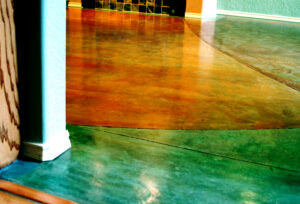
Concrete staining adds rich, lasting color to existing concrete by soaking into the surface instead of sitting on top like paint. It is one of the most affordable ways to upgrade a patio, pool deck, walkway, or interior floor without tearing anything out. At Fuller Stone Care, we use UV-stable, water-based stains that give homeowners and businesses a huge range of color options. When the job is done right, the result looks custom and holds up for years.
What Is Concrete Staining?
Concrete is porous, so it can absorb color the same way it absorbs water and oil. A concrete stain penetrates those pores and bonds with the surface. Because the color sits within the concrete instead of forming a film on top, stained concrete does not peel, chip, or flake the way painted concrete often does. Staining can mimic natural stone, add warm earth tones, or create a modern, uniform look, depending on the product and technique.
Acid Stains vs. Water-Based Stains: What’s the Difference?
There are two main types of concrete stain, and each produces a different look:
- Acid stains react chemically with minerals in the concrete. This creates a mottled, variegated finish, but the color range is limited mostly to browns, tans, and muted greens. Results can be hard to predict, and the acid residue has to be neutralized and rinsed away.
- Water-based stains come in a much wider palette, from subtle neutrals to bold colors. They give more consistent, predictable results and are easier to control. UV-stable formulas also resist fading in direct sunlight, which matters a great deal for outdoor surfaces in Southern California.
For most residential and commercial projects, a UV-stable, water-based stain offers the best balance of color choice, consistency, and longevity.
Which Surfaces Are Good Candidates for Staining?
Almost any structurally sound concrete can be stained, including:
- Patios and backyard entertaining areas
- Pool decks
- Driveways and walkways
- Garage floors
- Interior slab floors
- Commercial entryways and courtyards
Concrete that has heavy cracking, flaking, or old coatings may need concrete restoration before staining so the color absorbs evenly.
What Does the Professional Staining Process Involve?
Good staining results depend on careful preparation. A typical project includes:
- Deep cleaning to remove dirt, oil, mildew, and residue that would block absorption
- Stripping old sealers or coatings that prevent the stain from penetrating
- Repairing chips and cracks so the finished surface looks uniform
- Applying the stain in one or more coats to build the desired color and depth
- Sealing the surface to lock in the color and protect it from wear
Skipping prep is the most common reason DIY staining jobs turn out blotchy or fade quickly.
Why Is Sealing Important After Staining?
Sealing is what keeps stained concrete looking fresh. Without a sealer, the color is exposed to UV rays, foot traffic, water, and stains from spills. Professional concrete sealing adds a protective barrier that deepens the color and makes routine cleaning easier.
The type of sealer matters too. Breathable, vapor-permeable sealers let moisture escape from beneath the slab instead of trapping it. Trapped moisture can cause a sealer to turn cloudy, peel, or flake over time, which ruins the look of a fresh stain job.
How Long Does Stained Concrete Last?
The stain itself is long-lasting because it is part of the concrete surface. The sealer is the layer that wears, so most outdoor surfaces benefit from resealing every few years depending on sun exposure and traffic. Regular cleaning and periodic resealing can keep stained concrete looking vibrant for many years.
Ready to Give Your Concrete a Fresh New Look?
If your concrete looks dull, stained, or simply outdated, professional staining can completely change the space. Fuller Stone Care offers custom concrete staining with UV-stable colors and breathable sealers designed for lasting results. Call 310-944-9099 today to schedule a free quote and find the perfect color for your patio, pool deck, or floor.